
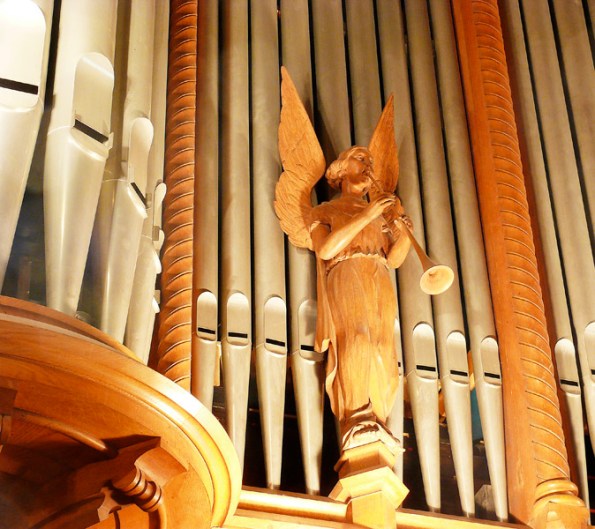
 They love the truth
as long as it’s about someone else,
doesn’t require them to do anything,
and doesn’t disturb their beliefs.
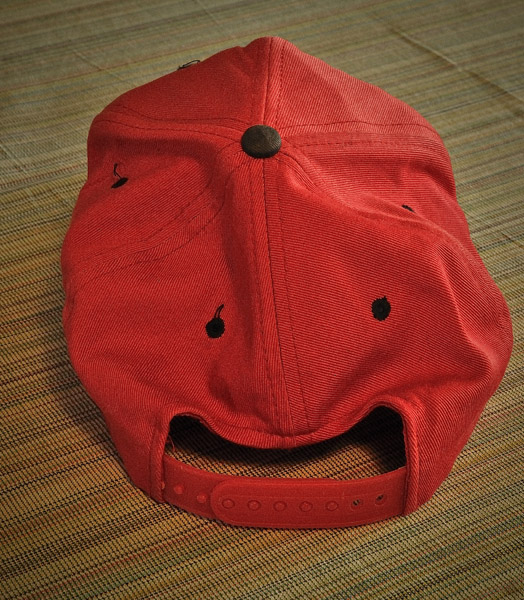
Help, I’ve lost my head!

The apes that first stood on two legs did so to fight. Climate changes knocked out the forests and all primates disappeared except those that learned how to fight with a rock in hand. Their enemies had been practicing ground fighting for 60 million years while they had adapted to a life in the trees. But the hand that could grip a branch could swing a stone with deadly force and even the odds against fast predators with sharp teeth.
It’s a boxer’s footwork supporting a twisting torso rather than a walker’s strut that explains the development of humans’ upright posture. Humans use their legs and feet with far greater skill than is required for walking. They dance, jump, hop, skip, skate, slide and kick. Dinosaurs ran on two legs, ostriches, birds and kangaroos use two legs. There’s not a footballer or ballerina among them.
The primate path to humanity began with rock & roll, not a march.
(Photo and text from the upcoming book System Humanity)
(As there’s a blue moon today, I offer a poem that concludes my upcoming book, System Humanity, the story of humanity from the dancing ape to the break-dancing citizen.)
Life’s Journey
Come, citizens!
Take your place beside me at the controls of our common soul! Let us steer through simple days gathering treasures for the wealth of our community.
We’ll present ourselves to full moons dressed in formal black studded with time cut stars and receive secrets too pure to be disbelieved.
We’ll enter the courts of majestic oceans, kneel on carpets of sand and accept rewards of ancient scents offered by salted air.
We’ll visit noble trees in forest camps, listen to their tales of the wind spoken in the language of leaves and learn the wisdom of their roots.
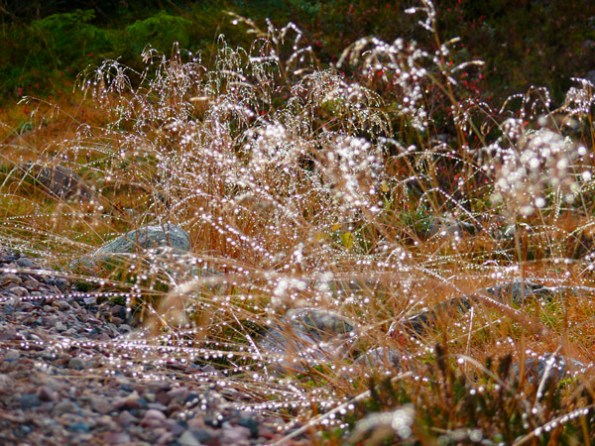
We’ll capture rainbows, win pearls of dew, and find moments of silence dripping with the balsam of peace.
Come, citizens, take your place beside me! Let us gather riches that have no price on a journey that has no end!
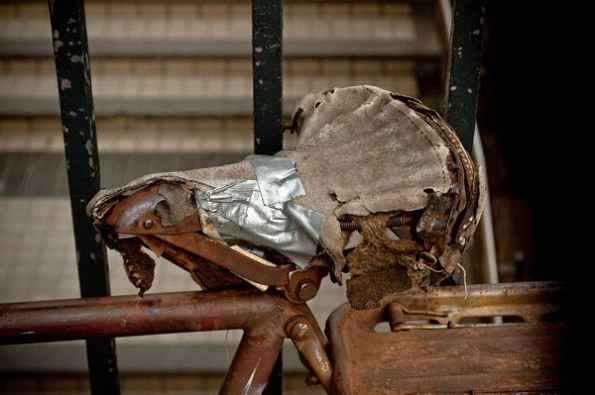
When life’s traffic jams, cycles pass porsches.
Many people depend on themselves to find their own way. They don’t flee from hardships. They use whatever is useful, fully aware that nothing is more useful than freedom and independence.
They are frowned upon by “decent” folk. Don’t be fooled by their rags. They are the heroes of the future, the seeds of a flowering tomorrow in a world of decent fruit.
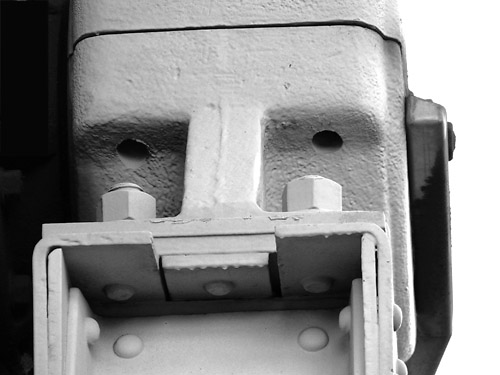
They are watching us, listening to us, scanning us, face-recognitioning us, controlling our web behavior, our telephone calls, credit card purchases and the books we borrow.
For our protection!
That’s the minor part. The major part is that we watch them; the shows, films and broadcasts that they want us to watch. The books, magazines, newspapers and ads—don’t forget the ads—that they want us to see. We’re not supposed to ask the obvious question.
Shouldn’t it be the other way around? Shouldn’t we be watching them? They are our representatives. What are they doing and who are they doing it with? How come they have so many secrets from us, the public, be we can’t have any privacy from them? Who is giving them bribes… (whoops, delete, I mean) donations? How come we keep getting poorer and they keep getting richer … protecting us.
They can’t see the depths of our hearts or the vastness of our souls, but they have their suspicions. That’s why they are watching us. For our protection.

This is Shuttianna. She watches us go by and says nothing to those who do not ask. No one does.
She stores the hopes and experiences of our ancestors. They are no secret. We hold the key to them in our DNA. We don’t even have to open her doors. We can open our own. She is just a reminder. “Look,” she says, “look inside!”
We don’t. We walk by, thinking or talking about things that would anger our ancestors by their insignificance. The holy force of life manifests itself in every grain of wood, every whisper of grass and every dance of a butterfly. Yet we speak not of life, but of things, people and events that we can’t influence and have no relevance to the health of our tribe.
I admire Shuttianna’s effort to look neutral. I tell her so. She thanks me and says that our ancestors are willing to offer the pursuit of happiness to anyone who abandons the pursuit of things.
“Are you certain?” I ask.
“Look inside!”

He wears his academic title like a medal, or a crown, pretending not to notice the tons of ignorance surrounding his few grams of exclusive knowledge. In his ignorance, he eagerly embraces the myth that knowledge is intelligence. It’s not. He’s not smart enough or honest enough to admit this. Knowledge is a collection of facts that function as tools to deal with specific situations. Intelligence is something else, but you can expect him and his colleagues to deny this vigorously.
He also assumes, in his arrogance, that his title includes a stamp of good character. It doesn’t, another myth without justification. History is littered with evil creatures equipped with jeweled merits.
He assumes himself to be among the leading minds of the times but takes no responsibility for what is happening and is engaged in no activities to improve things. How smart is that?
For proof of the limitations of his knowledge, ask him to suggest solutions to the problems plaguing us. You’ll probably hear the echo of his daily newspaper. Unlike citizens of the streets and bold bloggers, he exhibits no originality (intelligence).
There are of course knowledgeable people, with or without titles, who own considerable intelligence—and character. That doesn’t diminish the fact that many people with prestigious titles of knowledge lack smarts and act like a sphincter ani externus*.
* (That’s Latin for what the rest call an asshole.)

She carefully exaggerates the advantages of fame while hiding the problems that grow with fame’s growth, and never mentions that the problems continue to grow and become worse when fame fades.
She shows moments of smiles and hides hours of frowns.
She puts the spotlight on the ups and kills the lights on the downs.
Fame’s sugar gets sticky and messy in the storm of life.
I’ve seen them. The strong. The fast. The fearless.
I haven’t seen the strength of their love.
The speed of their tolerance.
The courage of their humility.
I haven’t seen them in the competition for justice.
The World Games for peace.
The Humanity Olympics.
I believe I will.
For the moment they are too busy trying to convince themselves that they need to be stronger, faster and braver to be what they are.
Challenging yourself is a limited challenge and you quickly reach a point where you can’t win.
The challenge to build a better world is the ultimate challenge and you quickly discover that you can’t lose when you’re helping everyone to win.

 System Humanity