

Are we worthy of love?
Do we believe that love will fill all our needs and solve all our problems?
Do we buy into the songs suggesting that love changes but we remain ”just the way we are”?
How deep have fairy tales buried their seeds of happily ever after?
Love unites.
Are we prepared to adjust to promote the fit?
Or do we expect someone to adjust to fit into ”just the way we are”?
How much are we willing to give of the self to get what unity has to offer?
Love unites.
People change.
The two people who unite today are not the same two people in a year or so. Neither of them are just the way they were.
Either we grow together—for grow we must—or we grow apart.
Once love unites it’s up to us to get it to stick around and keep us together.
At times, regardless of our efforts or qualities, it doesn’t work out. It takes two to get together, but only one to split.
At times it works happily—and battlingly—ever after.
Particularly when we face the truth about love.
“Yes, dear” has saved more marriages than “I love you”.
Dartwill Aquila
(Tomorrow: Even More Truth About Love)
Love is not all you need.
Sorry to burst some bubbles (and criticize a great song), but love is one of the things we need, not the only thing.
Think of love as a heart. It’s not all the body needs, but we’re not going very far without one.
Love is a force. It unites.
It’s a force. Like gravity.
Gravity pulls down. Love pulls together.
Getting together, uniting, is one of the most exquisite experiences. We extend our existence, whether parent-child, friends or lovers. We become richer, stronger, greater.
Love unites.
Then it’s our turn.
Does love hurt? Does it causes suffering? No. Love unites.
If the unity doesn’t fit or if it breaks apart, that can be painful. Don’t blame love.
It’s like blaming gravity when we fall.
Love unites. The rest is up to us.
________
“It’s difficult to maintain a We in a culture of Me.”
Dartwill Aquila
(Tomorrow: More Truth About Love)

(This is the third in a series on racism that appears on the 20th of every month.)
This is Hindia outside the train station. Her look of proud defiance captured my curiosity as I was about to walk by.
I walked up to her and asked if I could take her picture.
”Yes, certainly,” she replied without hesitation.
She was delighted to be approached by a normal Swede and we spoke a bit, but I had a train to catch. I handed her my card and asked her to send me a mail so that I could sent her the pictures I had taken.
She called a few days later and suggested that we meet at the train station again to talk some more. How nice.
When I mentioned my meeting with different friends, they warned me to be careful. Be careful! I was meeting a 40-something woman at noon for a cup of coffee and people felt a need to warn me to be on my guard.
We had a delightful time over coffee and cake. Hindia speaks Swedish, English, French, Italian and Arabic. She works as a translator. Her five children are grown and her husband has flown.
We laughed a lot. She has a strong sense of humor. We also learned a bit about each others lives. As people do.
We’re sure to meet again.
I’ll have to inform my (enlightened, liberal) friends that I survived the dangerous meeting with a strange woman from Somalia. I’ll also inform them that prejudices can prevent them from receiving smiles, sharing laughs and having interesting conversations.
“It can be proven
mathematically, biologically, religiously and historically
that we all belong to the same family.
But until it is felt, nothing is proven.”
Dartwill Aquila
(Tomorrow: The Truth About Love)
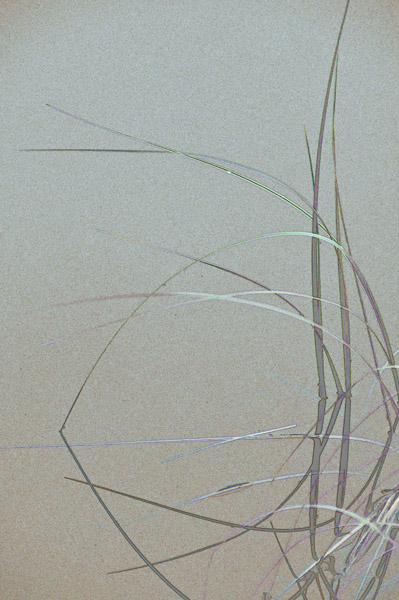
I call this my fuck-you picture.
When I get angry or upset at vulgarities attacking my senses, I stare at my fuck-you picture allowing its simple elegance to massage my insulted need of beauty.
Fuck the tingle-tangle-tinsle toys!
Fuck the useless expensive metal!
Fuck the plastic laughter played on nonsense!
Fuck the sins of fractured fashion!
Fuck the screaming symbols pasted on desperate lonliness!
Fuck the delicate mutilations to attract blind eyes!
Fuck the gaudy monuments to empty happiness!
Fuck the glittering titles polishing obedience!
Fuck the glorified greed spraying fear to protect its glory.
Fuck the forked tongues speaking through hidden fangs about the triviality of blood.
Fuck em!
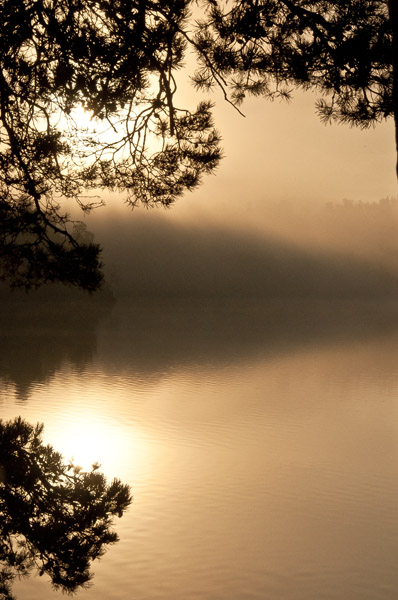
Whisper your song of grace, reeds! I listen.
Hum about the morning when the mist lay in the embrace of silence and the lake held its breath to honor the kingdom of harmony.
(Tomorrow: Hindia from Somalia)

Painting by the Swiss artist, Janine Cottier
We are so tiny and so powerful.
We are a speck that can see beyond the stars.
Our immeasurable insignificance houses dreams
the universe can’t imagine.
Our minds dance to the simple beat of our hearts
and enchant the resources of the earth
to serve our desires.
We are a miracle of creation grown arrogant,
abusing the sources that sustain us,
challenging the forces that maintains us.
We have the power to create magnificent beauty
if we could learn to submit to truth
and worship necessity.
Yes, we have the sight to see beyond the stars,
but do we have the vision to see beyond the day
and how we threaten our own tomorrow?
“By burying our heads in the sand,
we shorten the distance to the eternal darkness.”
Dartwill Aquila
(Tomorrow: Fuck-you Beauty)

We have so much stuff and stuff to put stuff in: closets, bureaus, draws, chests, boxes, jars …
Where do we put life’s stuff?
Where’s the container for smiles?
Where do we file longing?
Are there jars to preserve happiness?
Can respect be bottled?
What vault can hold love?
Life’s stuff can’t be stored. They can only be lived.
Too much stuff can get in the way of living.
There’s never too much of life,
only too little living.
“When you plant nature’s beauty in your heart, it grows into smiles.”
Dartwill Aquila
(Tomorrow: Heart, Mind & World)
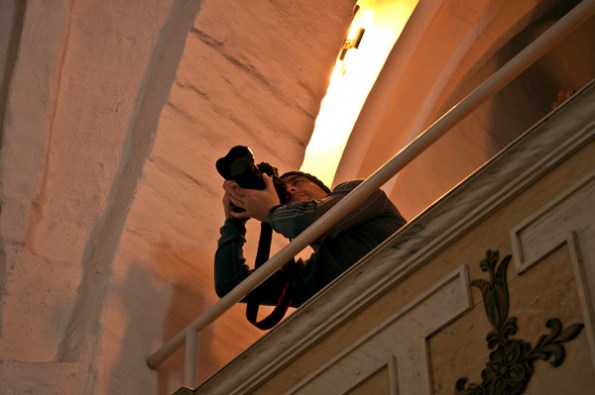
“A camera is a technological eye. A biological mind does the seeing.”
Dartwill Aquila
This is one of my favorite pictures of Miguel because of the light streaming out of his head. He was always ”chasing the light.”
We worked together for several years and I learned a great deal from this poet-with-a-camera from Chile. This other two pictures are Miguel’s.
During our last exhibition together—of and in the Cathedral of Linköping—we displayed 20 pictures each, but gave no indication of who had taken which pictures. It was our exhibition.
At the vernissage surrounded by friends and visitors, someone asked, ”Which of the pictures are yours?”
Knowing that Miguel could hear me a couple of feet away, I answered jokingly, ”Mine are the beautiful ones.”
All eyes turned to Miguel. He smiled and said, ”That’s true. Mine are the interesting ones.”


_______
Miguel doesn’t know that I’ve posted these pictures. Why don’t you write and surprise him: Miguel Muñoz Rubilar info@mimurufoto.com
(Tomorrow: Life’s Stuff)
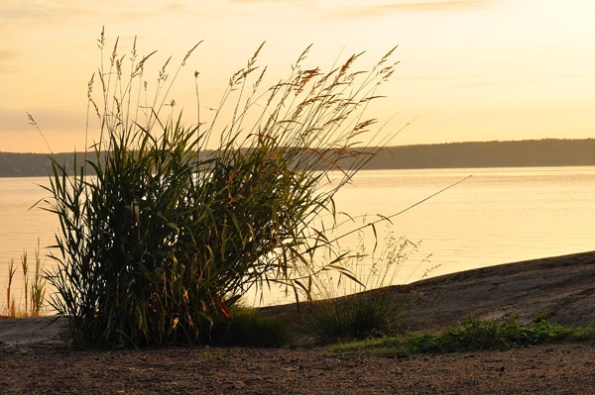
This is my 100th daily post. How should I celebrate?
After much contemplation while looking for a suitable picture to illustrate the ”big” event, I realized the insignificance of my tiny achievement among 100s of millions of posts.
This picture is an illustration. My post is the equivalent of one of the seeds on one of the stalks on this one clump of grass among 100s of thousands of similar ones.
I feel my strength as part of the community. Each seed whispering its truth. Together we represent the future because we are the children of a new day.
“Many bushes have looked down on the sprout of an oak.”
Dartwill Aquila
(Tomorrow: Miguel, The Photographer)
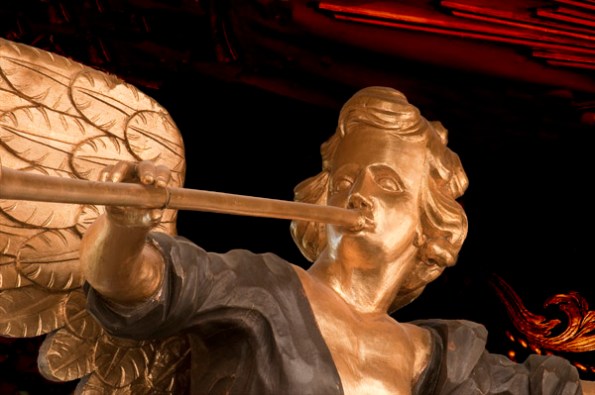
Hear ye, hear ye!
“Big words for fools, tricky words for clowns
empty rules under a rusty crown
mumbled facts under proper nouns.
Smart money says, they’re going down
a new English has come to town.”
Dartwill Aquila
There are 2,5 times as many people who speak English as a second language—a ”mate tongue” alongside their parent tongue—as there are native speakers and their numbers grow rapidly.
Not only does English seem destined to become the single dominant language of international communication, Mate English will undoubtedly become the main dialect of World English.
American English was considered poor British English for nearly 200 years. Today American English dominates. A similar destiny seems in store for Mate English whose many regional or national dialects will not be greater than those dialects spoken within Native English today.
In light of this tendency, two aspects should be kept in mind.
1. English is not a particularly good or bad language. It has its advantages and disadvantages, as do all languages. It has achieved its position because of historical, political and economical reasons, not because of any linguistic superiority.
2. Language is a tool of communication in the service of the people who use it. No one can own a language. A language belongs to the people who speak it. If anyone tries to tell you otherwise, say, “Fuck you!” and see if they understand.
(Tomorrow: Whispers of Grass)


 System Humanity